

Meet Chelsea
Chelsea Nixon, LCSW is a Therapist, relationship specialist, educator, and founder of The Relationship Lab.
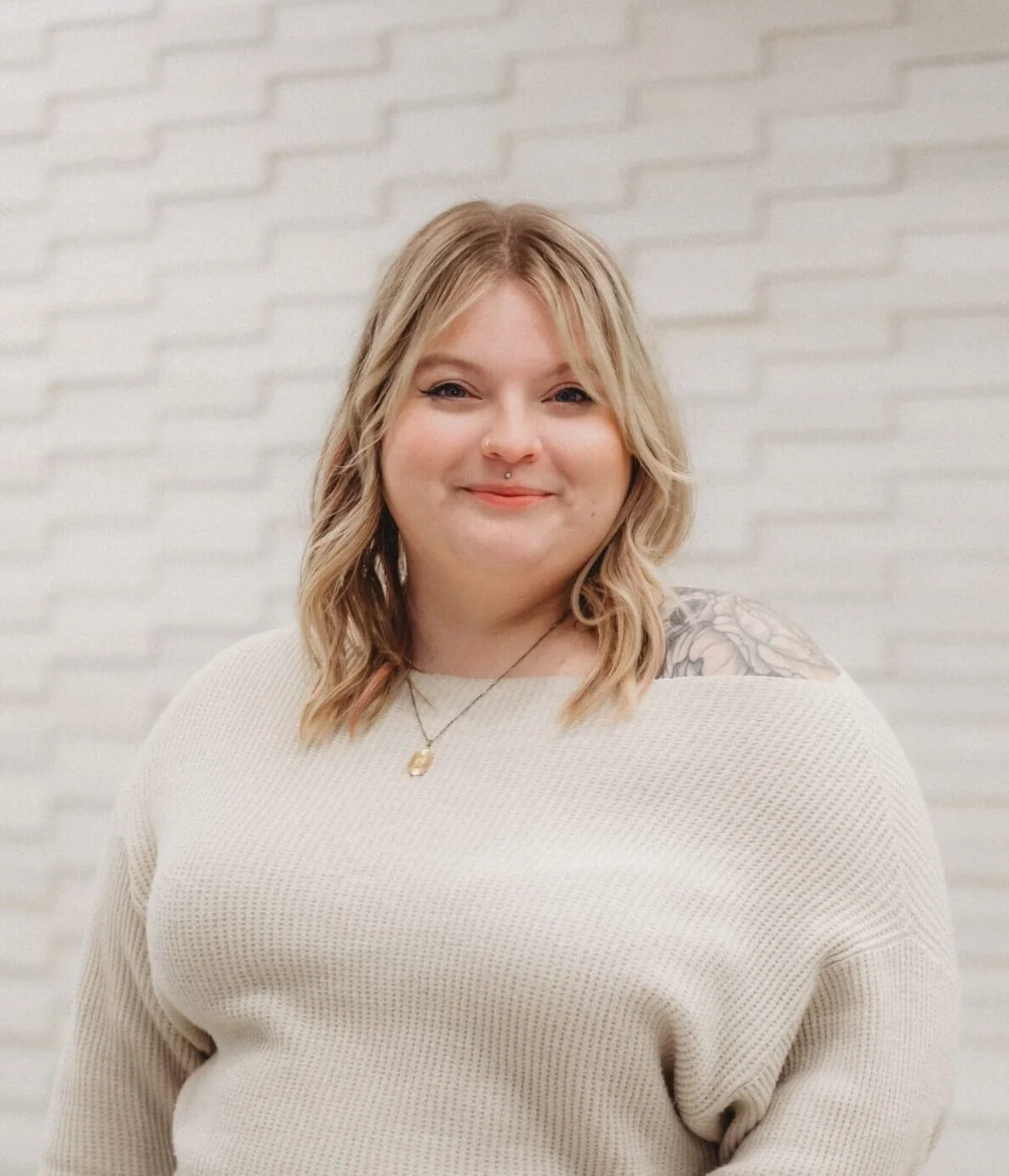
“The way we relate shapes the way we heal”
Hi. I’m Chelsea. I help people cultivate more honest relationships with themselves and others through experiential, attachment-focused therapy.
Therapy can become a place to understand your patterns, practice new ways of connecting, and discover what becomes possible when relationships feel more authentic, secure, and alive.
My Story
While being a relationship and attachment-focused therapist isn’t what I always expected to do, I’m also not sure anyone who knew my younger self would be surprised. There were early signs that my experience of the world was shaped by what happened between me and other people—like being five years old and afraid to walk down a flight of stairs, and a classmate quietly taking my hand and helping me make it down. I remember telling my mother afterward that hearts flew out of me. It was one of my first experiences of connection changing something internal in a very real way.
Over time, I found myself frustrated in my clinical training with how neatly many relational models tried to explain human suffering. I was drawn to attachment-based and insight-oriented frameworks, but I kept running into a gap between what those models predicted and what I was actually seeing in the room with clients. There was an assumption that if people could understand where their patterns came from, their emotional experience would naturally shift—that insight would soften reactivity, and shared understanding would lead to repair. But again and again, I saw people who understood themselves perfectly well and were still caught in the same cycles of protest, withdrawal, shutdown, and pursuit.
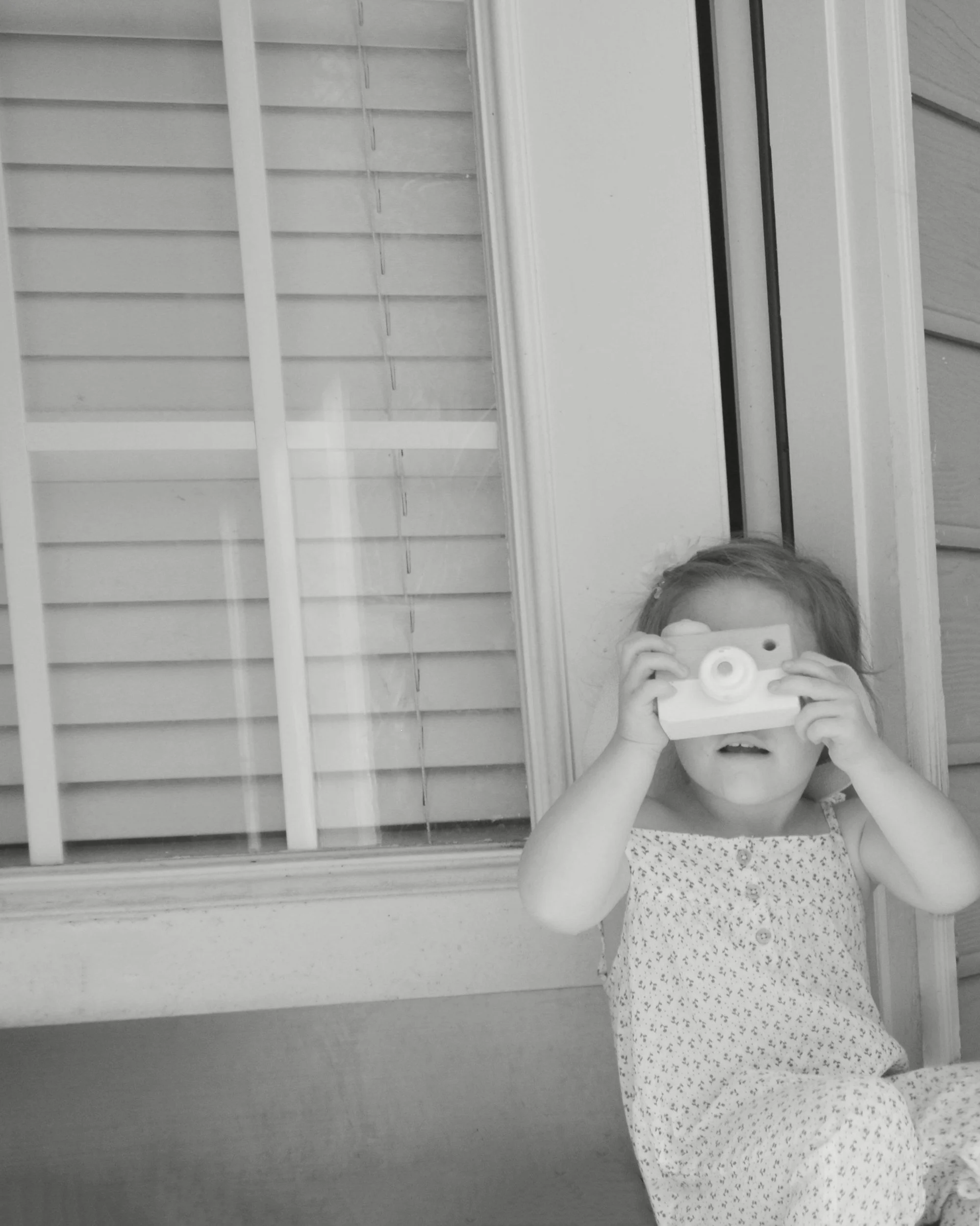
Little me, who hearts flew out of.
I began to see these models less as explanations of change and more as tools for structuring small experiments in the room. I became more interested in what happens when we stop trying to interpret the pattern and instead gently interrupt it. What changes if we try something slightly different here? What do we learn if we pause at the moment someone usually withdraws, or stay a breath longer in the place where someone typically defends or collapses? Over time, my work became less about making sense of relationships and more about creating conditions where something new could actually be tried—right in the middle of what is already happening.
My own life in relationship has deepened this orientation in ways no training could. I know what it is to feel the body tighten in anticipation of rejection before anything has been said, to move toward distance or self-protection almost automatically. I know how easily care can become over-functioning, and how invisible that effort can feel when it is not returned in kind. And I know the strange dissonance of understanding your own patterns without being able to fully step outside of them. At the same time, I also know what becomes possible when people stay in contact through rupture—when repair is not treated as an idea, but as something practiced in real time.

Some of the people who continually teach me about the resilience of love
As a queer and polyamorous therapist, I also hold a lived awareness of how narrowly many relational frameworks were built. Much of what I was trained in assumes a particular shape of relationship, and leaves little room for the realities my clients are actually living: differences in structure, identity, capacity, and consent that are not peripheral, but central. I pay close attention to the places where people are trying to build connection without a map that reflects the actual shape of their lives and relationships.
In my work, I am less interested in insight as an endpoint, and more interested in what becomes possible when we slow things down enough to notice what is actually happening between us. In those moments, change is rarely conceptual. It arrives as something small but unmistakable: asking for a need to be met in a different way because you recognize your agency and capacity for change, a pause allowing self-compassion and forgiveness to be found where there used to be blame, a moment where something once automatic becomes interruptible because you believed in something better for yourself and your relationship.

I will likely put another photo of me here once I get new ones taken and will use this caption to give credit to the photographer
Why This Work Matters to Me
For much of my life, I thought change came from understanding. If we could explain a problem clearly enough, we could solve it. What I have come to believe instead is that insight is only one part of the process.
I believe people are shaped in relationship and healed in relationship.
Not because every struggle can be traced back to a single attachment wound, but because relationships are where we learn what is possible. They are where we discover what happens when we reach for someone, when we protect ourselves, when we risk being known, and when we experience something different than we expected.
I don't think healing happens because someone gives us the right interpretation. I think healing happens when we have new experiences that challenge old expectations. When we discover that a difficult conversation doesn't lead to abandonment. When we express a need and remain connected. When we set a boundary and survive it. When we stay present with ourselves and another person through moments that once felt intolerable.
This belief shapes the way I practice therapy. Rather than only talking about patterns, I am interested in creating opportunities to notice and experiment with them in real time. Together, we get curious about what happens when we interrupt the familiar and try something new.
My Training
Education
BSW from Eastern Michigan University
MSW in Social Work from Loyola University Chicago
Areas of Focus
Couples therapy
Attachment and relationship issues
Consensual non-monogamy and polyamory
LGBTQIA+ affirming care
Emotional regulation and interpersonal patterns
Advanced Training
Certified Imago Relationship Therapist
Emotionally Focused Couples Therapy (EFT) externship
Internal Family Systems (IFS) parts work training and group consultation
Dialectical Behavior Therapy (DBT)
Onsite Psychodrama Institute
Perinatal Mental Health

Principles That Guide My Work
01
Connection is something we practice.
I believe meaningful connection is built through repeated acts of attention, attunement, and care.
02
Healing happens in relationship.
I believe when people feel understood, connected, and accepted by a compassionate other in the midst of their pain, powerful change happens.
03
Authentic relationships are built on small acts of courage
I believe that choosing vulnerability is courageous as it often means moving beyond our instinct to protect ourselves through defensiveness, avoidance, or control.
04
Learning to connect is an imperfect process
I believe growth in relationships requires trying, struggling, and finding our way back to one another again and again.
05
Relationships that matter stretch us beyond who we’ve been
I believe all meaningful relationships will bring us into discomfort at times because they require we grow in order to sustain them. These moments invite us to show up with greater courage, integrity, and care.
06
Relationships require us to own our impact
I believe we are responsible for the impact our choices have on others and that honest, authentic relationships require accountability and repair.
Mission and Vision
The mission of The Relationship Lab is to support the growth of meaningful, healing relationships within ourselves and with one another.
Our vision is to create a more connected and compassionate world where people approach themselves and one another with curiosity, courage, and a genuine desire to understand.
Ready to get connected?
Complete the form and we will reach out to you to discuss your needs and help you take the next step.